From Cheat Codes to Core Features: How Gaming Finally Learned to Include Everyone

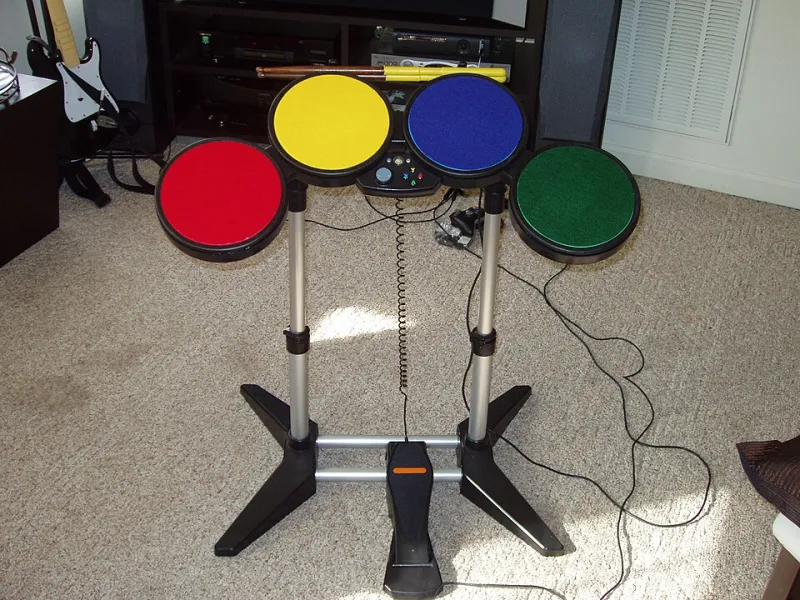
Photo: Jombo22Elliot, CC BY-SA 4.0, via Wikimedia Commons
The Cheat Code That Wasn't Really Cheating
Back in the day, pulling up a cheat code menu felt like sneaking into the back of the arcade with a skeleton key. You weren't supposed to be there. You definitely weren't supposed to tell anyone. But for a lot of players — kids with motor impairments, adults with vision loss, anyone who couldn't keep up with the reflex demands of a punishing game — those codes weren't about getting an unfair edge. They were about getting in at all.
Fast forward to today, and the gaming landscape looks genuinely different. Features that would've earned you side-eye at a LAN party in 2003 are now front and center in settings menus, celebrated in press releases, and defended loudly by developers. The cheat code didn't disappear. It grew up.
What "Accessibility" Actually Means in a Game
Here's where a lot of gamers get tripped up: accessibility isn't one thing. It's a whole toolbox.
For players with visual impairments, it might mean high-contrast modes, colorblind palettes, or text that actually scales to a readable size. For players with hearing loss, it's robust subtitle systems that don't just transcribe dialogue — they identify who's speaking, flag off-screen audio cues, and describe ambient sounds that carry gameplay information. For players dealing with mobility limitations or conditions like cerebral palsy, Parkinson's, or repetitive strain injuries, it could mean remappable controls, toggle options instead of holds, or — yes — aim assist.
None of that is cheating. All of it is design.
The shift in how the industry talks about these features tracks almost perfectly with how the conversation around cheat codes evolved. For years, both were treated as embarrassing concessions. Now, accessibility options are something studios genuinely compete on. The Last of Us Part II from Naughty Dog became a landmark moment — not just for its story, but for shipping with over 60 accessibility settings out of the box. Games like Celeste built difficulty modifiers directly into the core experience and called them "Assist Mode" without any hint of shame attached.
Aim Assist: The Feature Everyone Has an Opinion About
Few accessibility tools get more heat than aim assist, and it's worth unpacking why — because the debate around it reveals a lot about how gaming culture still struggles with this stuff.
For a player with limited hand mobility or a tremor condition, aim assist isn't a crutch. It's the difference between being able to play a shooter and being completely locked out of an entire genre. When you've got reduced fine motor control, the precision required to track a moving target with a thumbstick is genuinely impossible without some kind of assist. That's not a skill gap. That's a physical reality.
The frustration from the competitive community is understandable in multiplayer contexts — nobody wants an uneven playing field online. But conflating that specific concern with all uses of aim assist erases a huge population of players who rely on it just to participate. Single-player games especially have zero reason to gatekeep this feature.
And here's the thing: aim assist has existed in games since at least the early 2000s. Console shooters have always had some version of it baked in because thumbsticks are inherently less precise than mouse-and-keyboard. The accessibility conversation just finally gave the feature a proper name and a legitimate home in the settings menu.
The Subtitle Problem Nobody Talks About Enough
Subtitles feel like a solved problem. They're not.
For a long time, game subtitles were an afterthought — tiny white text over bright backgrounds, no speaker identification, dialogue that flew by faster than anyone could reasonably read. For deaf and hard-of-hearing players, this was the equivalent of being handed a book with half the pages torn out.
The push for better subtitle customization — adjustable font size, background opacity, color coding by character, caption descriptions for non-dialogue audio — came largely from disability advocacy groups and players who'd been vocal online for years about being underserved. It took a while, but developers started listening.
Games like God of War: Ragnarök, Forza Horizon 5, and Hades have all drawn praise for subtitle implementations that actually work. It sounds like a small thing until you realize that for millions of players, it's the difference between following the story and feeling excluded from it.
Difficulty Modifiers: The New Cheat Code
If there's one feature that most directly traces its DNA back to classic cheat codes, it's the adjustable difficulty modifier. And not just the standard Easy/Normal/Hard dropdown — we're talking granular sliders that let players tune enemy aggression, damage output, resource scarcity, and timing windows independently.
Hades II, Baldur's Gate 3, Returnal — games across completely different genres are experimenting with how much control to hand back to the player. Some studios are still cagey about it, worried about "cheapening" the experience. But the developers who've leaned into it fully tend to report the same thing: player engagement goes up, not down. More people finish the game. More people talk about it. More people buy the DLC.
For players with cognitive disabilities, chronic fatigue, or mental health conditions that affect concentration and processing speed, being able to slow down combat, extend time windows, or reduce punishment for failure isn't gaming the system. It's gaming, period.
The Culture Is Still Catching Up
Let's be honest: not everyone has gotten the memo. Gaming communities can still be rough spaces for disabled players who mention needing accessibility features. The old "git gud" mentality hasn't fully died. There are still forum threads arguing that difficulty options "ruin" games, as if someone else's settings affect your experience at all.
But the tide has genuinely turned at the developer level, and that matters. Studios that once would've buried these features in a back menu now lead with them in trailers. Organizations like AbleGamers and SpecialEffect have built real relationships with major publishers. The Game Awards has spotlighted accessibility achievements. The industry, slowly and imperfectly, is treating inclusive design as a baseline expectation rather than a bonus feature.
What Cheat Codes Always Were
Here's the reframe worth sitting with: cheat codes were never really about dishonesty. At their best, they were always about access. They were a way for players to experience a game on their own terms — to skip a frustrating section, to survive long enough to see the story through, to share a game with a younger sibling who couldn't handle the combat difficulty.
Accessibility features are just cheat codes that finally got the respect they deserved. They got proper names, proper menus, and proper advocacy behind them. The stigma lifted because enough people pushed back against it.
If you've ever used a cheat code to get past a wall that felt unfair, you already understand the core argument for accessibility design. You wanted to keep playing. So do they.
And that's always been the whole point.