Game Genie and the Glorious Era of Cheat Cartridges: How a Little Gray Dongle Changed Everything
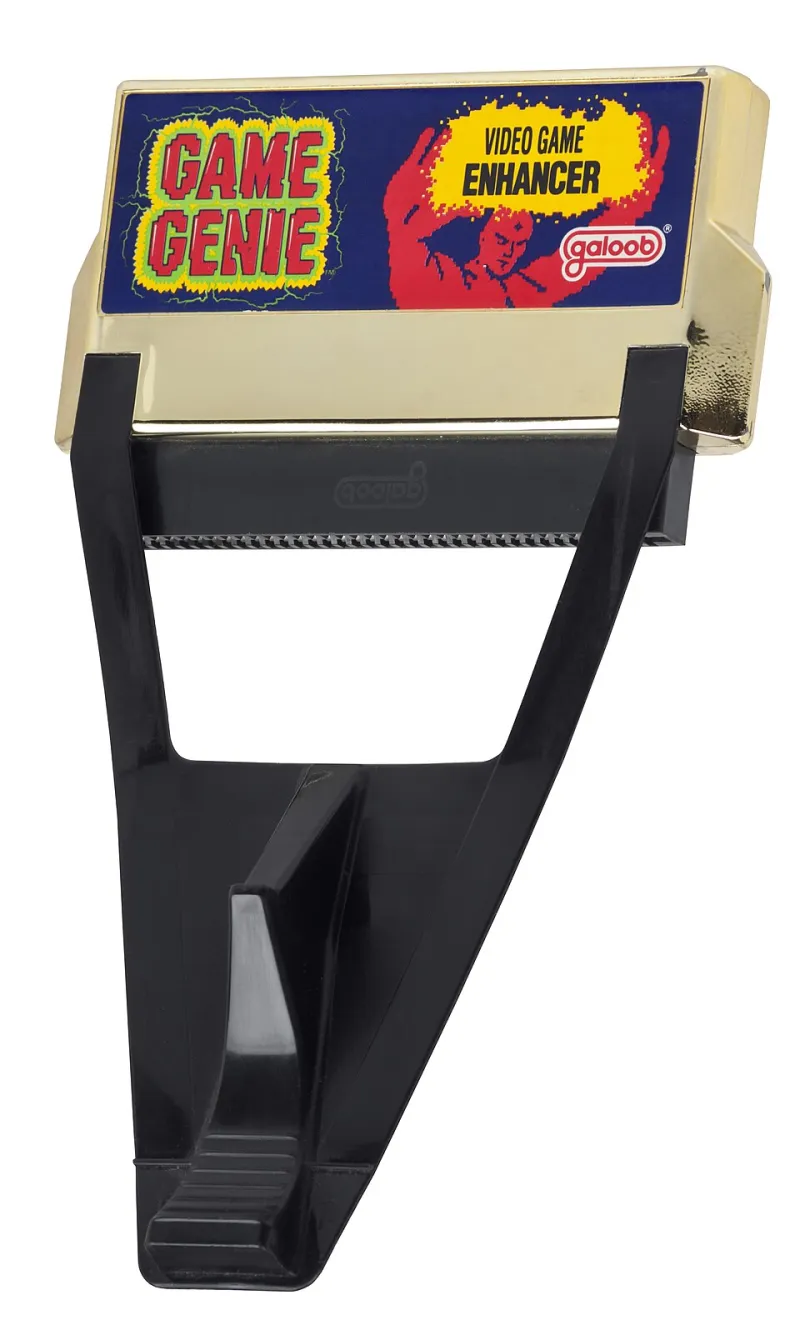
Photo: Evan-Amos, Public domain, via Wikimedia Commons
If you grew up gaming in America during the late '80s or '90s, there's a decent chance a gray plastic dongle changed your entire relationship with video games. The Game Genie didn't look like much — kind of like a cartridge that swallowed another cartridge. But what it did felt nothing short of miraculous.
Infinite lives. Walk through walls. Jump to any level. The Game Genie handed kids the keys to games they'd been banging their heads against for months. And it kicked off an era of cheat hardware that would define an entire generation's gaming culture.
The Device That Started It All
The Game Genie launched in the United States in 1990, developed by Codemasters and distributed by Galoob. It worked by intercepting data as it passed between the game cartridge and the console, substituting different values on the fly. In practical terms, that meant you could enter a code from a booklet — or later, from gaming magazines like Nintendo Power — and suddenly your character had infinite health, or enemies stopped spawning, or you had access to items you weren't supposed to have yet.
Nintendo initially tried to block the device's US sale, arguing it created derivative works and infringed on their intellectual property. A federal court disagreed. The ruling, which found in favor of Galoob, became a landmark moment for consumer rights in gaming — establishing that players had meaningful latitude to modify their own gaming experience.
That legal win mattered. It set a precedent that echoed forward into debates about ROM hacking, emulation, and modding that continue to this day.
GameShark, Action Replay, and the Arms Race of Cheat Hardware
The Game Genie was just the opening act. As consoles evolved, so did the hardware designed to crack them open.
The GameShark arrived in the mid-'90s and quickly became the go-to device for PlayStation and Nintendo 64 owners. Where the Game Genie worked with a codebook, the GameShark connected to a PC and could download fresh codes from the internet — a genuinely futuristic feature for the era. GameShark codes were everywhere: on gaming websites, in the back pages of GamePro, traded on early message boards. Having a GameShark felt like being part of a secret club.
The Action Replay, which had roots in European markets before crossing the Atlantic, offered similar functionality with some additional tricks. It became particularly popular among Game Boy Advance owners in the early 2000s, and its codes circulated freely across the proto-internet forums that a certain generation of American kids grew up on.
These devices weren't just cheat tools. They were portals into the hidden architecture of games. Entering the right code could unlock developer test rooms, access cut content, or reveal glitched states that looked like something out of a fever dream. For a lot of players, that was more exciting than finishing the actual game.
Why These Things Hit Different
There's something worth unpacking about why cheat cartridges inspired such intense nostalgia. It wasn't just about making games easier — though that was certainly part of it. It was the ritual of the whole thing.
You'd flip open the code booklet. You'd carefully type in a string of letters and numbers, double-checking each one. You'd boot the game and hold your breath to see if it worked. When it did — when you suddenly had 99 lives or your character moved at triple speed — there was a genuine thrill. You'd done something. You'd reached into the game and changed it.
That feeling of agency, of pulling back the curtain on how a game actually worked, was addictive. It planted seeds for a generation of game developers, modders, and hackers who went on to shape the industry.
The ROM Hacking Scene: Keeping the Spirit Alive
Fast forward to today. Cheat cartridges themselves are largely obsolete — emulators handle that function more elegantly on PC, and modern consoles use entirely different architectures. But the culture those devices spawned? It's thriving.
ROM hacking communities have been active since the late '90s, but they've grown dramatically in the age of high-speed internet and accessible development tools. Sites like ROMhacking.net host thousands of fan-made modifications to classic games — everything from simple translation patches for Japanese-exclusive titles to entirely new games built on classic engines.
Some ROM hacks have become genuinely famous in their own right. Pokémon ROM hacks like Pokémon Gaia and Pokémon Unbound have attracted hundreds of thousands of players who've never touched the originals. Super Mario World hacks have been a fixture of speedrunning culture for years, with creators building levels that range from lovingly faithful to deliberately absurd. There are even ROM hacks of ROM hacks at this point.
The people doing this work are often deeply technical — they've spent years learning assembly language, reverse-engineering game data structures, and building tools that let others modify games without needing a computer science degree. It's a form of creative mastery that doesn't get nearly enough mainstream recognition.
The Legal Gray Zone
Here's where things get complicated, because they always do when creativity runs up against intellectual property law.
Distributing ROMs — copies of game data ripped from physical cartridges — exists in a murky legal space in the United States. The general consensus among legal experts is that downloading a ROM of a game you don't own is copyright infringement, full stop. Distributing ROMs commercially is clearly illegal. But the enforcement picture is messy: Nintendo has pursued some high-profile cases while ignoring vast swaths of the emulation and ROM hacking community for years at a time.
ROM hacks themselves are a separate question. A patch file that modifies a game — rather than distributing the game itself — is generally considered to be on firmer legal ground, since the user still needs to supply their own ROM. Most reputable ROM hacking communities distribute patches rather than complete files for exactly this reason.
None of this has slowed the scene down much. If anything, the community has gotten more sophisticated about operating within whatever legal framework exists. The creative output keeps coming.
Why Retro Gamers Can't Quit This Stuff
Ask anyone deep in the retro gaming community why they're still messing with 30-year-old cartridges and you'll get a consistent answer: these games hold up, and the tools to explore them just keep getting better.
Modern flash cartridges like the Everdrive series let players load entire game libraries onto a single cartridge, with built-in cheat code support. These devices are the spiritual successors to the GameShark — same energy, better technology. Meanwhile, emulators like RetroArch have built-in cheat engines that make the Game Genie look quaint by comparison.
But there's also something irreplaceable about the physical experience. Collectors who track down original Game Genie units aren't just chasing nostalgia for its own sake — they're preserving a piece of gaming history that tells a specific story about how players and games related to each other before the internet changed everything.
The Legacy
The Game Genie, GameShark, and Action Replay weren't just accessories. They were philosophy — an argument that games belong to the people who play them, not just the people who make them. That argument helped birth the modding scene, influenced open-source gaming culture, and quietly shaped how a generation thinks about creativity and code.
At CheatCodesWeb, we were basically born from the same tradition. The idea that you can look at a game's rules and decide to play by different ones? That's not cheating. That's gaming.