Up, Up, Down, Down: The Strange Psychology Behind Gaming's Most Recycled Button Combos
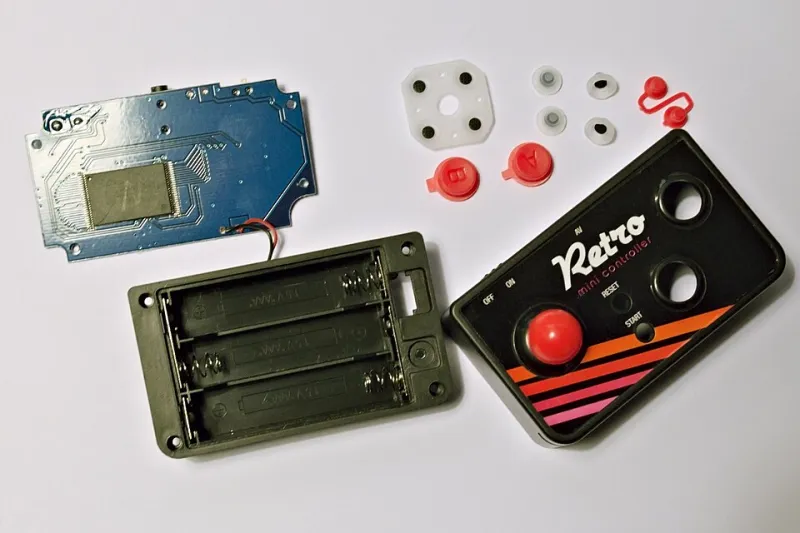
Photo: Multicherry, CC BY-SA 4.0, via Wikimedia Commons
If you've been gaming for more than a few years, you already know the sequence. Up, up, down, down, left, right, left, right, B, A. You probably didn't even have to think about it. That's kind of the whole point.
Cheat codes have been baked into gaming culture since the early arcade era, but something interesting happens when you start looking at which codes developers choose. Certain patterns keep showing up across completely unrelated games, studios, and even console generations. That's not laziness — it's a window into how game developers think about memory, muscle memory, and the strange relationship between players and secrets.
Why the Konami Code Refuses to Die
The Konami Code didn't start as a cultural monument. Kazuhisa Hashimoto, a developer working on the NES port of Gradius in 1986, needed a way to test the game without grinding through it from scratch every session. He punched in a sequence that felt natural on a D-pad and forgot to remove it before the game shipped. Players found it. Then they found it again in Contra. Then in Castlevania. Then in literally hundreds of other titles across four decades.
The code became famous not because it was clever, but because it was repeatable. The directional sequence follows a mirrored logic — up/up, down/down, left/right, left/right — that your thumbs almost want to do on their own. Add the simple B, A button tap at the end and you've got something that feels like a natural phrase in controller language. It's rhythmic. It's satisfying to input. And once you've done it once, you never really forget it.
That stickiness is exactly why other developers kept borrowing it. A cheat code that players already know is a cheat code that actually gets used.
The Design Logic Nobody Talks About
Here's something most gaming coverage skips over: cheat codes have always been a functional design problem before they're anything else. Developers need sequences that are hard to trigger accidentally during normal gameplay but easy enough to remember and input deliberately. That's a surprisingly narrow target to hit.
Directional inputs work well because they're contextually separate from most in-game actions. On a D-pad, you're typically moving a character or navigating menus — not punching in six-direction sequences with face button finishers. That separation creates a natural barrier against accidental activation. Meanwhile, the physical layout of a standard controller means certain sequences just feel good to execute. Symmetrical patterns, alternating inputs, combinations that use both thumbs in sequence — these aren't random choices.
When you see a cheat code like Left, Right, Left, Right, it's partly because that pattern is genuinely difficult to stumble into during normal play, and partly because it's easy to teach someone over the phone or in a magazine tip section. Pre-internet, that shareability mattered enormously. A code that was too complicated never spread. A code that was too simple got triggered by accident. The classics hit a sweet spot that's easy to underestimate.
How Gaming Magazines Turned Codes Into Cultural DNA
The other piece of this puzzle is distribution. In the late '80s and through the '90s, publications like Nintendo Power, GamePro, and Electronic Gaming Monthly were basically the internet for American kids. If a cheat code showed up in those pages, millions of players would read it, copy it into a notebook, and try it out that weekend.
That kind of mass simultaneous exposure created something unusual: shared muscle memory across an entire generation. When a developer at a different studio wanted to hide a secret in their own game, borrowing a code that players already had burned into their fingers was a shortcut to a guaranteed discovery moment. It was almost a form of communication between developers and their audience — a wink that said we know you know this one.
That cross-game familiarity is a huge part of why certain sequences feel iconic rather than arbitrary. They're not just codes. They're a shared vocabulary.
The Indie Revival and Intentional Nostalgia
Fast forward to today, and something interesting is happening in the indie space. Developers who grew up with these codes are deliberately reviving them — not because they need testing shortcuts, but because the codes themselves carry emotional weight.
Games like Cuphead, Shovel Knight, and a handful of smaller releases have leaned into retro cheat aesthetics specifically to trigger that recognition response in players who came up during the cartridge era. Entering a classic-style sequence and hearing a familiar jingle isn't just a gameplay feature — it's a memory delivery system. These developers aren't hiding codes because they have to. They're hiding them because the act of finding them is the point.
This is a genuinely clever design move. In an era where every secret gets datamined and posted to Reddit within 48 hours of a game's launch, a cheat code that requires physical input creates a moment that feels personal even when it's widely known. You still have to do the thing. Your thumbs still have to remember.
What Sticks and Why
Not every cheat code becomes legendary. For every Konami Code, there are thousands of forgotten sequences that lived and died in a single game's manual. The ones that persist share a few traits: they're physically intuitive, they're easy to verbalize and share, and they got enough early exposure to become reference points.
The Konami Code hit all three. It spread through magazines, it transferred across multiple beloved franchises, and its input pattern genuinely feels good to execute. That combination turned a developer's testing shortcut into a piece of American gaming culture that's been referenced in everything from Saturday morning cartoons to Super Bowl commercials.
The button sequences that keep coming back aren't random. They're the ones that found the overlap between physical comfort, memorability, and cultural momentum. Once a pattern earns that status, developers keep reaching for it because it already means something — and in game design, meaning that arrives pre-loaded is incredibly valuable.
Next time you punch in a familiar sequence and something unexpected happens, take a second to appreciate what you're actually doing. You're participating in a tradition that stretches back almost 40 years, built on a testing shortcut that one developer forgot to delete. Gaming history is weird, and that's exactly what makes it great.