Die, Learn, Repeat: Why Roguelikes Are the Greatest Gaming Teachers Ever Built
Let's be honest. Dying in most games feels terrible. You lose progress, you lose time, and if you're playing something like a FromSouls title with your friends watching, you lose a little dignity too. But something weird happens when you boot up a roguelike. You die — maybe dozens of times before lunch — and instead of rage-quitting, you're hitting that restart button before the death animation even finishes. What's going on there?
The short answer: roguelikes are secretly the best tutorial system ever designed. The longer answer is a lot more interesting.
What Even Makes a Game a Roguelike?
Before we get into the psychology, let's get on the same page. A roguelike — or roguelite, if you want to split hairs — is a game built around a few core ideas: procedurally generated levels (so the map is different every run), permadeath (when you die, you start over), and some form of meta-progression (you carry something forward between runs, even if it's just knowledge).
Think Hades, Dead Cells, Slay the Spire, Enter the Gungeon, Binding of Isaac. These games have exploded in popularity over the last decade, and it's not a coincidence. They've cracked something that most game designers spend entire careers chasing: how to make failure feel meaningful.
The Psychology of the "One More Run"
Here's what's happening in your brain when you play a roguelike. Every run is a contained experiment. You go in, you make decisions, you see how far those decisions take you, and then you die. But here's the key — you almost always understand why you died. Maybe you took the wrong upgrade path. Maybe you panicked during that elite enemy encounter. Maybe you just got a bad item seed and the odds stacked against you.
That clarity is enormously powerful. In a traditional game, dying to a boss for the twentieth time can feel random and unfair. In a roguelike, death usually comes with a lesson attached. It's the difference between a coach saying "you lost" and a coach saying "you lost because you kept leaving your left side open."
Games like Hades lean into this hard. Between runs, characters literally talk to you about what happened. The narrative is woven around the repetition. Dying isn't a setback in the story — it is the story. That's a design masterstroke, and it reframes failure as participation rather than punishment.
Every Run Is a Data Point
Spend enough time in the roguelike community and you'll hear experienced players talk about runs the way scientists talk about experiments. "That run taught me that stacking speed bonuses is useless without survivability." "I learned that floor three is where most of my deaths happen, so I need to be more conservative with resources before I get there."
This is genuine strategic thinking, and it develops naturally because the genre demands it. You can't brute-force a roguelike. You can't just grind the same area until you're overleveled. Every run forces you to adapt to what you're given, which builds a kind of flexible intelligence that rigid, linear games rarely develop.
Casual players who pick up Slay the Spire for the first time often report that after fifty or sixty hours, they start noticing themselves thinking differently about resource management in other games. That's not a coincidence. The habit of analyzing why a run failed translates directly into better decision-making everywhere.
The Meta-Progression Safety Net
One thing that separates modern roguelites from the brutal originals is meta-progression — the permanent upgrades you unlock between runs. In Hades, you're earning Darkness and Keys that make future runs slightly more manageable. In Dead Cells, you're unlocking starting weapons. In Rogue Legacy 2, your failed heirs literally fund the next generation's upgrades.
This is the genre's masterstroke for player retention. You never feel like you're starting from absolute zero. Even your worst run probably netted you something — a new weapon you've never tried, a lore drop that recontextualized the story, or just a little more currency toward that upgrade you've been saving for.
For players who've historically avoided difficult games because failure felt too punishing, this is the on-ramp. You're not just dying and restarting. You're dying and building. That distinction matters more than it might seem.
How Roguelike Thinking Makes You Better at Everything
Here's the practical takeaway for anyone who plays games beyond the roguelike genre. The mental framework these games teach — analyze the failure, adjust the approach, re-enter without ego — applies to almost every challenging game you'll ever touch.
Struggling with a Dark Souls boss? Think like a roguelike player. What specifically killed you? What did you do in the ten seconds before death that set up the problem? Was it a positioning mistake, a greedy attack, or a panic roll in the wrong direction? Break it down, adjust one variable, try again.
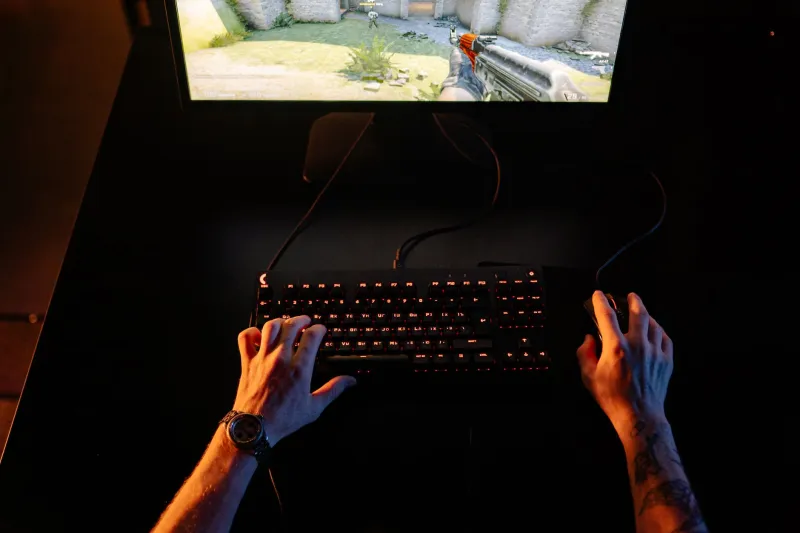
Getting stomped in a competitive shooter? Same principle. Stop blaming teammates or lag and start treating each death as a data point. Where were you on the map? What were you doing when the kill happened? What would a different decision have looked like?
The roguelike mindset turns every failure into a question instead of a verdict. And questions are a lot more useful than frustration.
The Genre That Accidentally Built Better Gamers
Nobody sat down and said "let's design a genre that teaches players how to learn from failure." The roguelike format evolved from early dungeon crawlers and survival games, refined over decades by developers who just wanted to make something replayable and challenging. But the side effect of all that design work is a genre that quietly trains players to think more critically, adapt more quickly, and handle setbacks more gracefully.
If you've never seriously invested time in a roguelike, Hades is the easiest entry point — it's gorgeous, the combat feels amazing, and the story gives you a reason to care about every run. If you want something more mechanically demanding, Dead Cells will push your reflexes while Slay the Spire will absolutely wreck your ability to trust yourself at card games.
Any of them will teach you something. That's kind of the whole point.
Start Dying on Purpose
It sounds backwards, but one of the best things you can do to level up your overall gaming skills is to intentionally spend time in a genre that kills you constantly. Not because suffering is good, but because structured, meaningful failure is one of the most efficient teachers out there.
Roguelikes figured that out before most game designers were even thinking about it. And now that the genre has gone mainstream, millions of players are getting smarter without even realizing it — one failed run at a time.
So next time a game sends you back to the title screen, don't close the app. Ask yourself what just happened. Then hit restart. The lesson's right there waiting.