How Modern Games Turned 'Cheats' Into a Lifeline for Millions of Players

Photo: Jombo22Elliot, CC BY-SA 4.0, via Wikimedia Commons
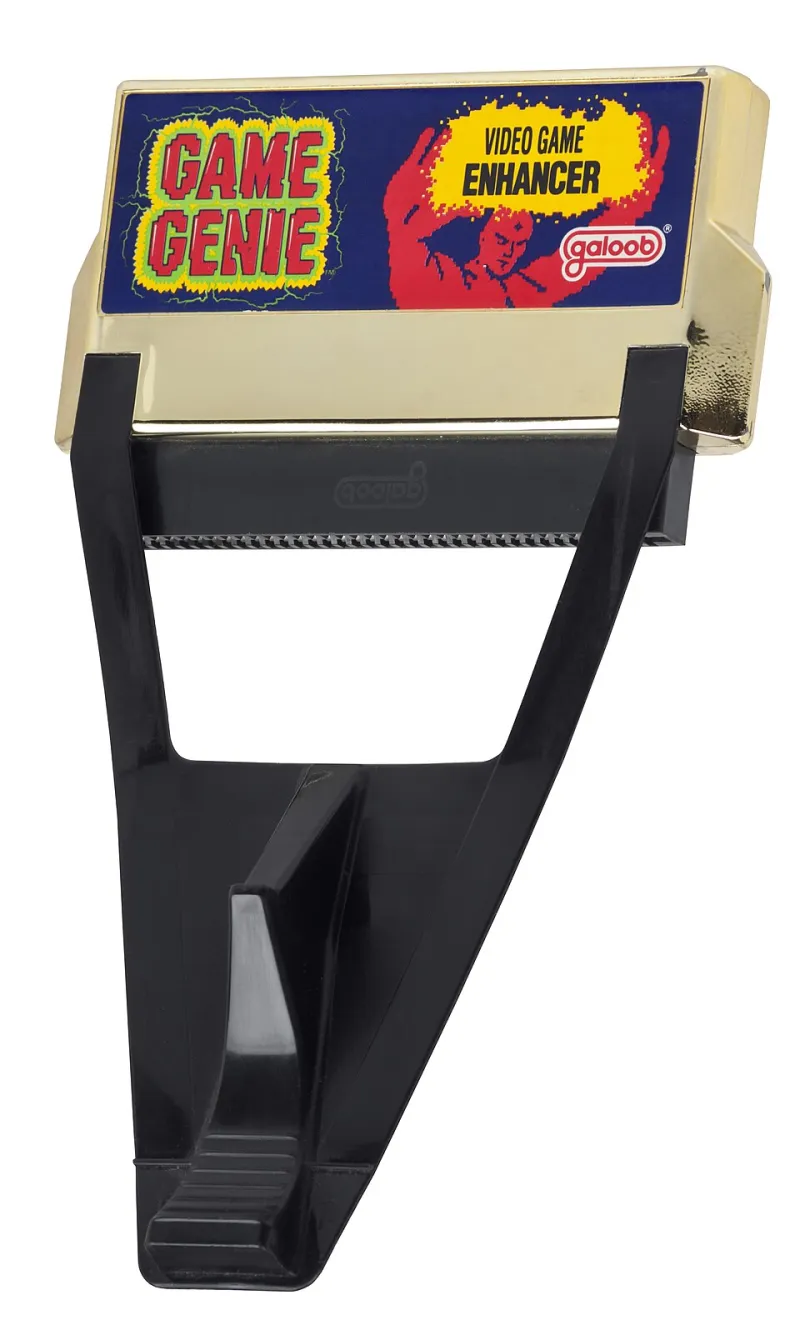
For decades, "cheat code" carried a pretty specific connotation: something you used to get an unfair edge, skip the grind, or just mess around with a game's systems for laughs. The phrase had a slightly rebellious flavor to it — like you were getting away with something.
Fast forward to today, and the DNA of the cheat code lives on in some of the most thoughtful, intentional design choices in modern gaming. Except now, instead of being a secret you typed in at a title screen, these features are front and center in the settings menu. And for a significant portion of the gaming population, they're not shortcuts — they're the only way in.
The Numbers Tell a Big Story
The CDC estimates that roughly 61 million adults in the United States live with some form of disability. Among those, a substantial number are gamers — or want to be. Visual impairments, motor control limitations, cognitive differences, chronic pain conditions, hearing loss: these are real factors that shape how (and whether) someone can engage with a video game.
For a long time, the industry's answer to that reality was basically silence. You either played the game as designed or you didn't play at all. The concept of accessibility in game design was treated as a niche concern, something for the margins.
That's changed — dramatically — over the last several years. And interestingly, the features leading that charge look a whole lot like what we used to call cheats.
Aim Assist: From Controversy to Cornerstone
Few features in gaming have generated more heated debate than aim assist. Competitive players have argued about it for years, with some calling it an unfair advantage that undermines skill-based play.
But zoom out from the competitive context, and aim assist tells a different story entirely. For players with tremors, limited fine motor control, or conditions like Parkinson's disease, the ability to have a game gently correct for shaky input isn't an advantage — it's the feature that makes the game playable at all.
Modern implementations of aim assist have gotten increasingly sophisticated. Games like Forza Horizon 5 and the Call of Duty franchise offer tiered aim assist settings that let players dial in exactly how much correction they want. That granularity matters. It means a player with mild tremors can get just enough help without the experience feeling automated, while someone with more significant motor challenges can bump it higher and still feel engaged.
The "cheat" framing completely collapses when you consider this use case. It's not cheating. It's engineering a workable input system for a wider range of human bodies.
Colorblind Modes: Small Toggle, Massive Impact
Approximately 8% of men and 0.5% of women in the United States have some form of color vision deficiency. In a medium where color is often used to communicate critical information — enemy markers, resource indicators, map elements, UI warnings — that's a lot of people being left out of the full experience.
Colorblind modes recolor or relabel these elements so that players who can't distinguish certain hues can still read the game's visual language. Madden, Halo, Overwatch 2, and dozens of other major titles now ship with these options built in.
From a pure game-mechanics standpoint, colorblind mode functions a lot like a cheat: it changes how information is displayed to give the player an easier time parsing what's on screen. But calling it a cheat would be absurd. It's correcting for a mismatch between the game's default design and the player's perceptual reality.
The lesson here is important: what looks like an "advantage" from one angle is often just equity from another.
The Celeste Standard — and What Followed
If there's a landmark moment in the accessibility-as-design conversation, it's the Assist Mode that shipped with Celeste in 2018. Developed by Maddy Thorson and Noel Berry, the game was already being praised as one of the tightest, most demanding platformers in years. Then the developers did something unexpected: they built in a suite of options that let players slow the game's speed, activate invincibility, or even skip levels entirely.
Critically, they didn't hide it or frame it as a lesser experience. They were direct: some players have disabilities, some are playing with their kids, some just want to see the story. All of those are valid reasons to use Assist Mode, and none of them make your playthrough less real.
The response from the disability gaming community was significant and emotional. Players who had never been able to finish a game in this genre suddenly could. For many, it was a first.
Celeste sparked a broader industry conversation that's still going. Studios began looking at their own pipelines differently. Accessibility consultants started getting seats at design tables earlier in development. The question shifted from "should we include this?" to "how do we do it well?"
The Last of Us Part II and Raising the Bar
If Celeste opened the door, The Last of Us Part II kicked it off the hinges. Naughty Dog shipped the 2020 sequel with over 60 accessibility options — one of the most comprehensive implementations ever seen in a AAA title at that point.
The list included text-to-speech for menus, high-contrast display modes, customizable control remapping, lock-on targeting, traversal assistance, and the ability to adjust nearly every timing-based mechanic in the game. Players who were blind or had low vision could navigate menus independently. Players with one hand could remap the entire control scheme to make it work for them.
Adam Lefton and Michael Berrow, who worked on accessibility for the title, spoke publicly about their process — including consulting directly with disabled gamers and advocacy organizations. The result wasn't a list of grudging accommodations. It was a genuine rethinking of how a game can meet players where they are.
Redefining What "Cheating" Even Means
The through-line across all of these examples is that the cheat code concept has quietly matured into something more sophisticated. The old model was about exploiting a system — finding a crack in the design and slipping through it. The new model is about expanding access to the design itself.
Advocacy organizations like AbleGamers and SpecialEffect have pushed hard for this shift, working directly with studios and lobbying for accessibility to be treated as a baseline expectation rather than a bonus feature. Their argument is simple and hard to counter: gaming is one of the most social, creative, and emotionally rich entertainment forms humans have ever built. Locking people out of it because of how their bodies or minds work isn't a design philosophy — it's a failure of imagination.
At CheatCodesWeb, we've always been in the business of helping people get more out of their games. And when you look at it through that lens, accessibility features are the most powerful "cheats" in the history of the medium. They don't just let you skip a hard level. They let you into the game in the first place.
That's not cheating. That's the whole point.